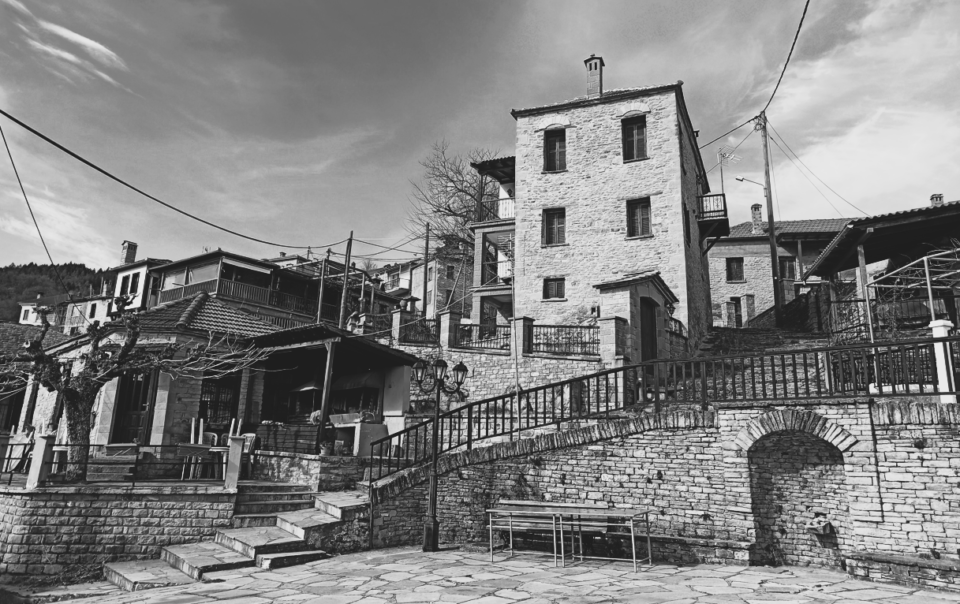
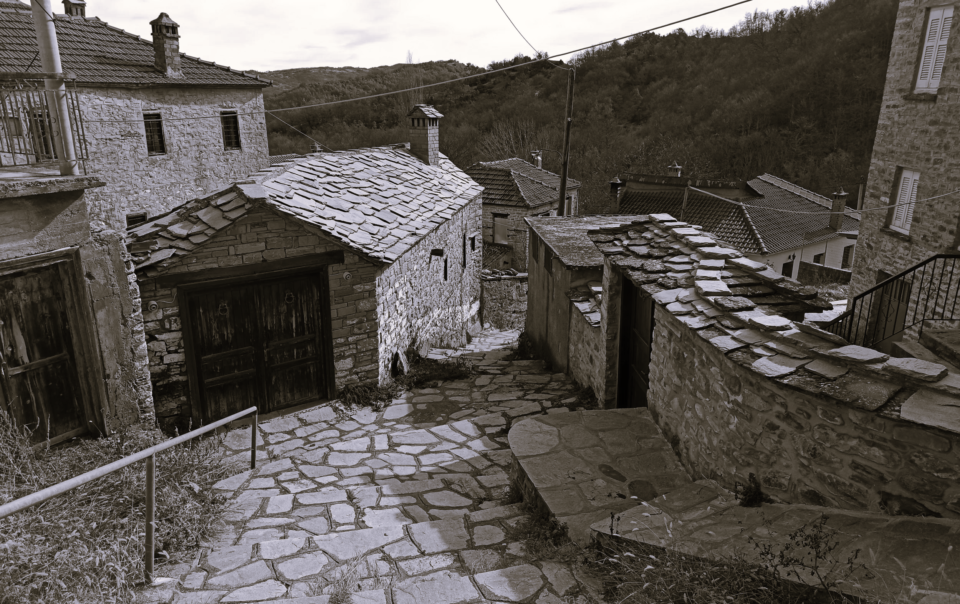
Η Καλλονή είναι “Μαστοροχώρι του Βοίου”, ο οικισμός δημιουργήθηκε γύρω στο 1690. Η πρώτη επίσημη καταγραφή του χωριού εντοπίζεται το 1797 στα αρχεία της ιστορικής Ιεράς Μονής Ζάβορδας.
Until 1927, the village was named Lountzi (or Lountsi). It was renamed to "Kalloni" due to the beauty of its landscape and buildings. A lush green, stone-built, mountainous traditional settlement at an altitude of 1,080 meters.
Ορεινός και άγονος ο τόπος απο παλιά. Τόπος της πέτρας.
Οι πετράδες του Βοΐου, μάστορες της πέτρας επί τουρκοκρατίας οργανωμένοι σε συντεχνίες που μιλούσαν τα “κουδαρίτικα” (η συνθηματική τους γλώσσα), έχτισαν εκκλησιές, γεφύρια και αρχοντικά σε όλη τη βαλκανική και τη μεσόγειο.
They used local stone to create structures tailored to the natural landscape. On the corners of these stone-built houses, they would carve the date, figures, or religious symbols.
Τα πετρόκτιστα “μαστοροχώρια του Βοΐου” , Πεντάλοφος, Βυθός, Δίλοφο, Δασύλλιο και Καλλονή αποτελούν ζωντανά μηνμεία της παραδοσιακής αρχιτεκτονικής.